 Breaking News & Live Updates
- Breaking News & Live Updates
- Breaking News & Live Updates
- Breaking News & Live Updates
- Breaking News & Live Updates
- Breaking News & Live Updates
- Breaking News & Live Updates
- Breaking News & Live Updates
- Breaking News & Live Updates
- Breaking News & Live Updates
Mental Illness
Mental Illness
Real-time updates and in-depth insights keep you always ahead of the curve.
Antidepressant Use During Pregnancy and Neurodevelopmental Outcomes in Children: A Comprehensive Review
Mental IllnessUnraveling the Complex Social Paths of Autism and ADHD Traits to Mental Health Issues
A recent longitudinal study published in 'Psychological Medicine' explores how autism and ADHD traits contribute to mental health problems in children. It reveals that social difficulties such as peer conflicts, academic struggles, and family disputes do not linearly lead to mental health issues but rather engage in bidirectional relationships, forming self-reinforcing cycles as children develop through elementary and junior high school. The research highlights distinct social pathways for autism and ADHD traits, emphasizing the need for tailored support.
Mental IllnessMental Illness
Brain Scans Uncover Tau Buildup in Late-Onset Psychosis Patients
A recent Japanese study revealed a significant correlation between late-onset psychosis (onset after age 40) and the accumulation of amyloid-beta and tau proteins in the brain. These proteins are known indicators of Alzheimer's disease and other forms of dementia. Notably, many patients exhibited tau buildup without amyloid, suggesting diverse underlying brain pathologies. The findings, published in Molecular Psychiatry, underscore the potential neurodegenerative basis of psychosis manifesting later in life, opening new avenues for diagnosis and treatment strategies.
Divergent Brain Responses to Reward in ADHD and Autism Revealed by Advanced Imaging
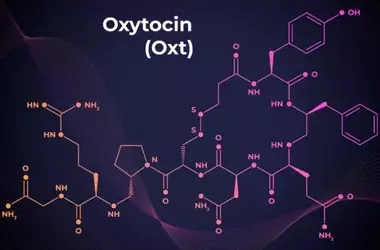
Oxytocin System and Childhood Trauma in Functional Neurological Disorder
A study explored the oxytocin system's role in Functional Neurological Disorder (FND), particularly its links to childhood trauma and interoception. While genetic variations alone didn't directly cause FND, interactions between genetics, epigenetics, and oxytocin levels showed associations with how patients process physical sensations and past trauma. The research suggests a complex interplay between biological factors and life experiences in FND development.

Salsa Dancing: A Rhythmic Remedy for Depression in Young Adults
A recent study published in "Psychological Medicine" reveals that an eight-week salsa dancing program significantly reduces depressive symptoms and social anxiety in young adults. This randomized trial, comparing a dance group to a waitlist control, highlights the potential of social movement activities as an accessible and engaging mental health intervention, especially for a demographic often underserved by traditional therapies. The findings suggest that the combination of physical activity and social interaction inherent in salsa can offer substantial benefits, including improved mood and preserved social enjoyment.

Inner Dialogue During Psilocybin Therapy Linked to Alcohol Abstinence
A new study suggests that how individuals engage with a psilocybin experience may predict their success in maintaining alcohol abstinence. Participants who focused on inner dialogue, self-reflection, and commitment to change during their psychedelic session were more likely to remain abstinent three months later, compared to those who focused on sensory and emotional experiences. This highlights the potential importance of active cognitive processing during psychedelic-assisted therapy for alcohol use disorder.

Childhood Loneliness and Social Isolation: Enduring Impacts on Young Adults
A new study reveals that loneliness experienced during childhood does not necessarily lead socially isolated youth to reconnect with others later in life. Instead, both childhood loneliness and social isolation independently predict a range of mental health and socioeconomic challenges in young adulthood. These findings challenge previous evolutionary theories suggesting that loneliness acts as an adaptive alarm, motivating individuals to improve their social connections. The research highlights the critical need for direct interventions to address loneliness and isolation in children.
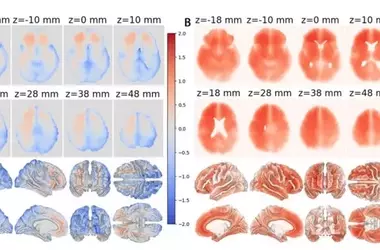
AI Reveals Asymmetric Brain Aging and Alzheimer's Markers
A new study utilizing artificial intelligence and MRI scans has revealed that the human brain ages unevenly, with the right hemisphere generally showing more advanced biological aging than the left. This research, published in PNAS, introduces a novel AI approach to map localized brain aging at a fine-grained level, identifying specific regions that exhibit accelerated aging in individuals with Alzheimer's disease and mild cognitive impairment. The findings underscore the importance of regional brain age assessment over a single global score for detecting early signs of neurodegeneration.

Visceral Fat Loss Linked to Slower Brain Aging and Improved Cognition
New research suggests that reducing deep belly fat, specifically visceral fat, may slow brain aging and enhance cognitive function. Unlike overall body weight or subcutaneous fat, visceral fat's metabolic activity and release of inflammatory molecules appear to be a distinct risk factor for neurodegeneration, with improvements in blood sugar regulation potentially playing a key role in protecting brain health.